

 Tiếng Việt
 PRODUCT CATEGORIES
During the rainy season, or any time you ride through a flooded street, water getting into the engine is a real fear for a lot of riders. It doesn’t just leave you stranded on the side of the road; if it isn’t dealt with quickly, water can wreck the mechanical parts deep inside the engine.
So how do you know for sure that water has gotten in, and what should you do to bring the engine back to full health? Here’s a practical breakdown.
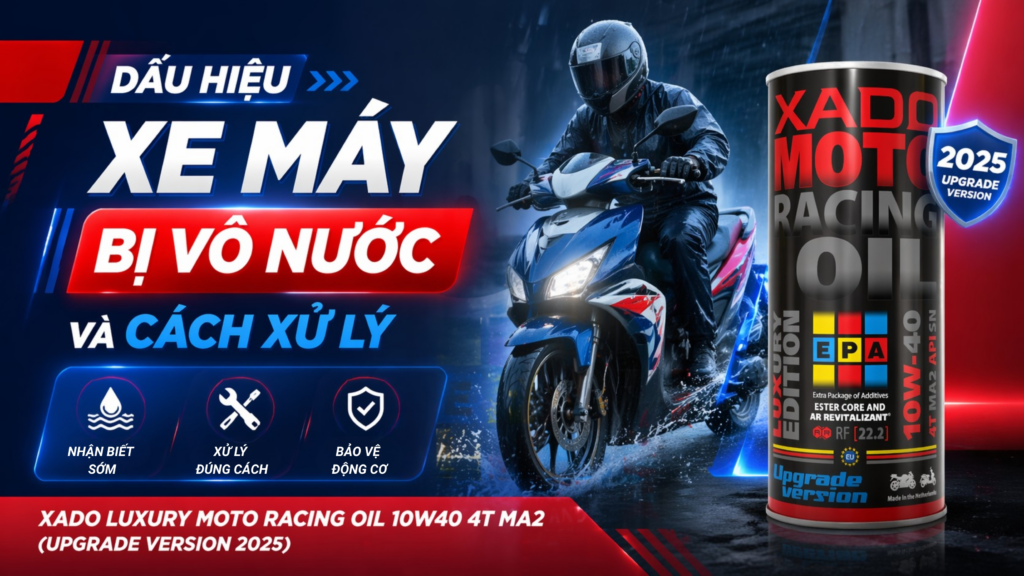
4 telltale signs your motorcycle has water in the engine
Water can find its way into the engine through several paths, such as the exhaust, the breather, or the air filter housing. According to technicians, these are the clearest warning signs to watch for.
- The oil turns a milky, coffee-like color: This is the most reliable sign of all. Normally, engine oil is a clear yellow, or dark brown once it’s been used for a while. But when water gets into the crankcase and mixes with the oil under the engine’s spinning motion, the two emulsify into a cloudy, milky-coffee-colored sludge.
- The bike is hard to start or stalls suddenly: Water in the combustion chamber soaks the spark plug and effectively kills the ignition. The bike becomes very hard to start, and even if it does fire up, it runs weak, surges and stutters, and tends to stall while you’re riding.
- The engine gets loud and rough: Once the oil is contaminated with water, it loses its ability to lubricate. Metal parts such as the piston, cylinder, and gears rub directly against one another, producing loud noises, abnormal heat, and a rougher engine note than usual.
- A soaking-wet air filter: If you wade through deep water, it can easily flood the air filter housing. A waterlogged filter blocks air from reaching the combustion chamber, throws off the air-fuel mixture, and leaves the bike unable to run.
What to do right away when your motorcycle floods
If you spot any of these signs, stay calm and take these technically sound first-aid steps immediately to keep the damage to a minimum.
Do not try to restart the engine. If water has already reached the combustion chamber, cranking it again can cause hydrolock, which bends the connecting rod or cracks the engine case. Those repairs are extremely expensive.
Drain all the old oil. Get the bike to the nearest service center and completely drain the water-contaminated oil.
Flush the engine. Use a dedicated engine flush to clear out the grime and any water still sitting in the crankcase. This may need to be done two or three times until the engine is completely clean.
Check and clean the components. Remove the spark plug and dry it, inspect the electrical system, and replace the air filter element if it’s soaked through.
Refill with fresh oil. Once everything is clean, refill with new oil to the manufacturer’s specified capacity and grade.
Restoring the engine after a flood with XADO
Here’s something few mechanics will tell you: even after a fresh oil change and a thorough flush, your engine has already taken hidden damage. During the time the oil was contaminated and unable to lubricate, the piston and cylinder were rubbing directly against each other, leaving countless microscopic scratches across the metal surfaces. That’s why a bike often runs weaker, burns more fuel, and wears out faster after a flooding incident.
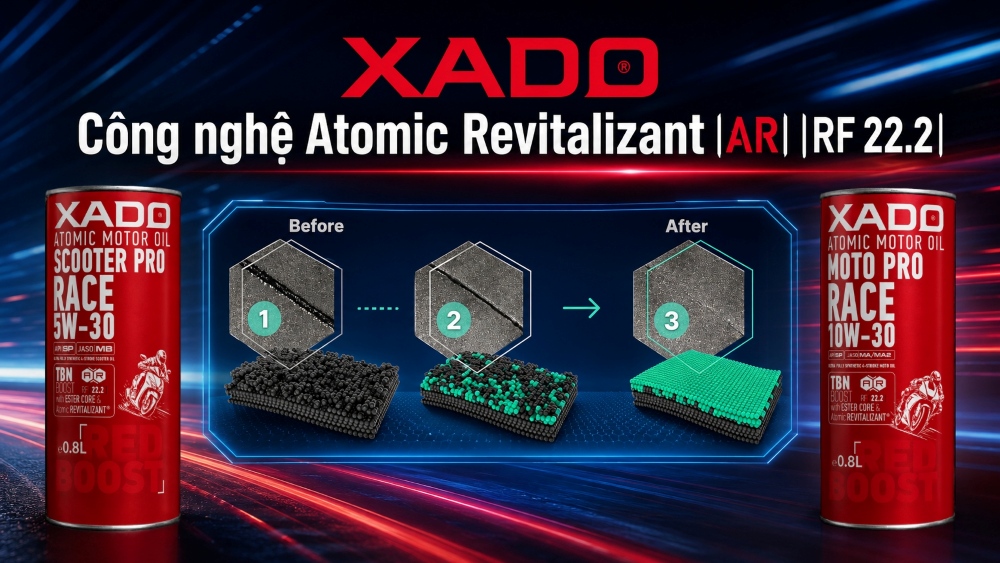
This is exactly where XADO’s restoration technology comes in, backed by one of the world’s leading engine-care chemistry brands.
Why use XADO oil on a motorcycle that’s been flooded?
Instead of tearing the engine down to replace parts, you can use XADO Luxury Moto Racing Oil 10W40 4T MA2 to both refill and protect the engine after a flood.
- It rebuilds the metal surfaces: The Revitalizant compound in XADO seeks out the scratches and wear caused by the friction during the flood, then reacts with the metal at high temperature to form an ultra-hard ceramic-metal protective layer.
- It restores combustion-chamber compression: That ceramic-metal layer fills the gaps between the piston and cylinder, bringing back the chamber’s compression. The bike regains its pep and shakes off the sluggishness left behind by the flood.
- It protects going forward: XADO’s coating doesn’t just repair. It also shields the engine against future wear, extending the life of the engine block by two to three times.
💡 Tip: Once you’ve handled the flooding and changed the oil, you can add one tube of XADO EX120 to the oil and let the bike idle for about 3-5 minutes. The metal revival process then happens naturally over the next 1,000-1,500 km, giving you back a smooth, strong engine that runs as if the flood never happened.
The bottom line
A flooded motorcycle is something no one wants to deal with, but if you can recognize the warning signs and follow the right process, you can absolutely save your bike. And don’t forget to add XADO’s restoration products to heal the hidden damage inside the engine, so your ride stays dependable on every road ahead.
XADO VIETNAM
Address: 2nd Floor, VinFast Building – D1, 135–139 Dong Van Cong Street, Cat Lai Ward, Ho Chi Minh City
Website: www.xadovietnam.vn
Dealership inquiries: 028 77777 369
Email: kinhdoanh@songdailong.com






 About XADO